
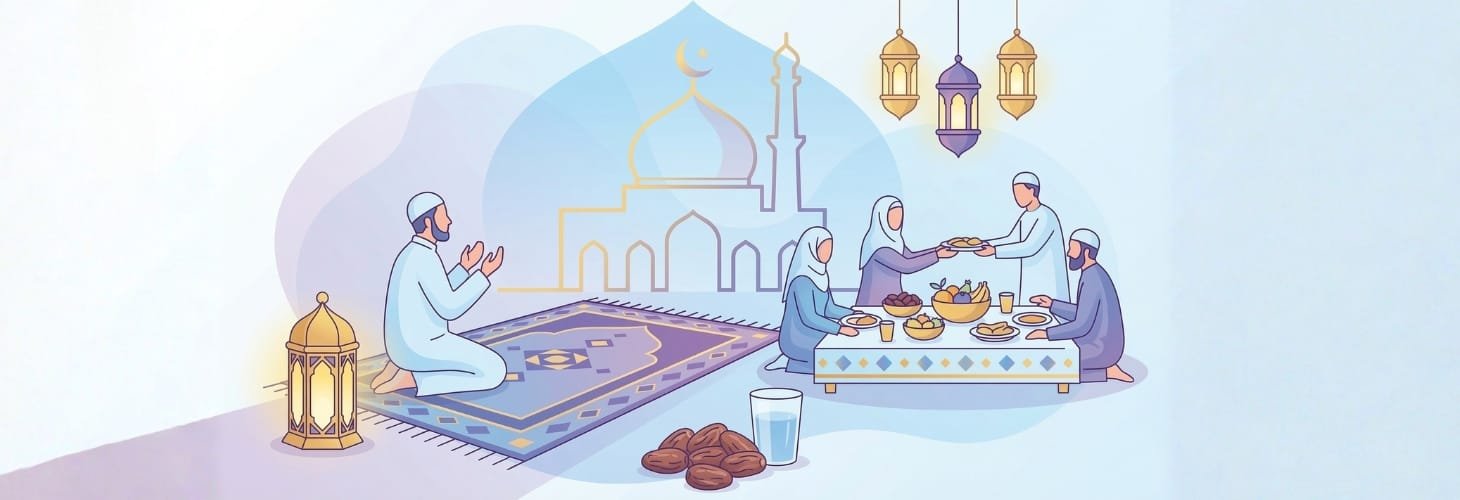
Understanding the rules and traditions of Ramadan is essential for both those observing the month and neighbors looking to show support. While the focus is on spiritual discipline, the daily practice follows specific guidelines to ensure a healthy and meaningful experience.
At Mosaic of Charlotte, we help our community navigate these traditions through education and shared service.
1. Core Rules: Who Fasts and Why?
Fasting (Sawm) is one of the Five Pillars of Islam. It is an intentional reset for the soul.
Who is required to fast?
Fasting is obligatory for healthy adult Muslims. However, Islam prioritizes the sanctity of life and health, providing clear exemptions for:
- Children: Those who have not yet reached puberty.
- The Elderly: Those for whom fasting would be physically taxing.
- The Sick: Individuals with medical conditions or those requiring regular medication.
- Mothers: Women who are pregnant, nursing, or menstruating.
- Travelers: Those on a journey of a significant distance.
Note on missed days: If you miss a fast due to a temporary reason (like travel), you can make it up later in the year. If you cannot fast permanently, you can provide Fidya—a charitable donation to feed someone in need for each day missed.
2. What Breaks the Fast?
To maintain a valid fast, one must abstain from the following from dawn until sunset:
- Intentionally eating or drinking.
- Smoking.
- Engaging in intimate relations.
Common Myths: Accidental eating (forgetting you are fasting) or brushing your teeth does not break the fast, provided you do not swallow water or paste.
3. Daily Traditions: Suhoor to Iftar
Ramadan creates a beautiful daily rhythm that centers on family and faith.
- Suhoor: The pre-dawn meal. We encourage our Kids Mentorship students to choose high-fiber foods to stay energized.
- Taraweeh: Special nightly prayers performed in congregation at the mosque. These prayers are a time of deep peace and communal bonding.
- Iftar: The sunset meal to break the fast. Traditionally, we start with dates and water, following the example of the Prophet Muhammad (pbuh).
4. The Last Ten Nights & Laylat al-Qadr
The final ten days of Ramadan are the most sacred. They contain Laylat al-Qadr (The Night of Power), believed to be the night the Quran was first revealed. Muslims spend these nights in intense prayer, seeking a “spiritual upgrade” and forgiveness.
5. Community Spirit and Giving
You cannot separate Ramadan from charity. This month, we turn our internal reflection into external action through our Humanitarian Relief programs.
- Zakat: The obligatory giving of 2.5% of one’s wealth to those in need.
- Sadaqah: Voluntary acts of kindness and financial support.
- Community Meals: We host Interfaith Dialogue dinners to break bread with neighbors of all backgrounds, building a stronger Charlotte.
Support Your Community This Ramadan
The rules of Ramadan remind us that we are responsible for one another. Join Mosaic of Charlotte in bringing these traditions to life through service.
How you can help:
- Pay Your Fidya/Zakat: Ensure your contributions go directly to local families in need.
- Volunteer at an Iftar: Help us host and serve our neighbors during our community dinners.
DONATE TO THE RAMADAN COMMUNITY FUND Your generosity helps us sustain these beautiful traditions across the Queen City.
FAQ: Rules Simplified
1. What happens if I eat by mistake?
Simply stop as soon as you realize, and continue your fast. Your fast remains valid!
2. Can non-Muslims join Iftar?
Absolutely! Ramadan is a time for hospitality. Our Community Dialogue events are open to everyone.
3. What is the traditional greeting?
You can say “Ramadan Mubarak” (Blessed Ramadan) or “Ramadan Kareem” (Generous Ramadan).